
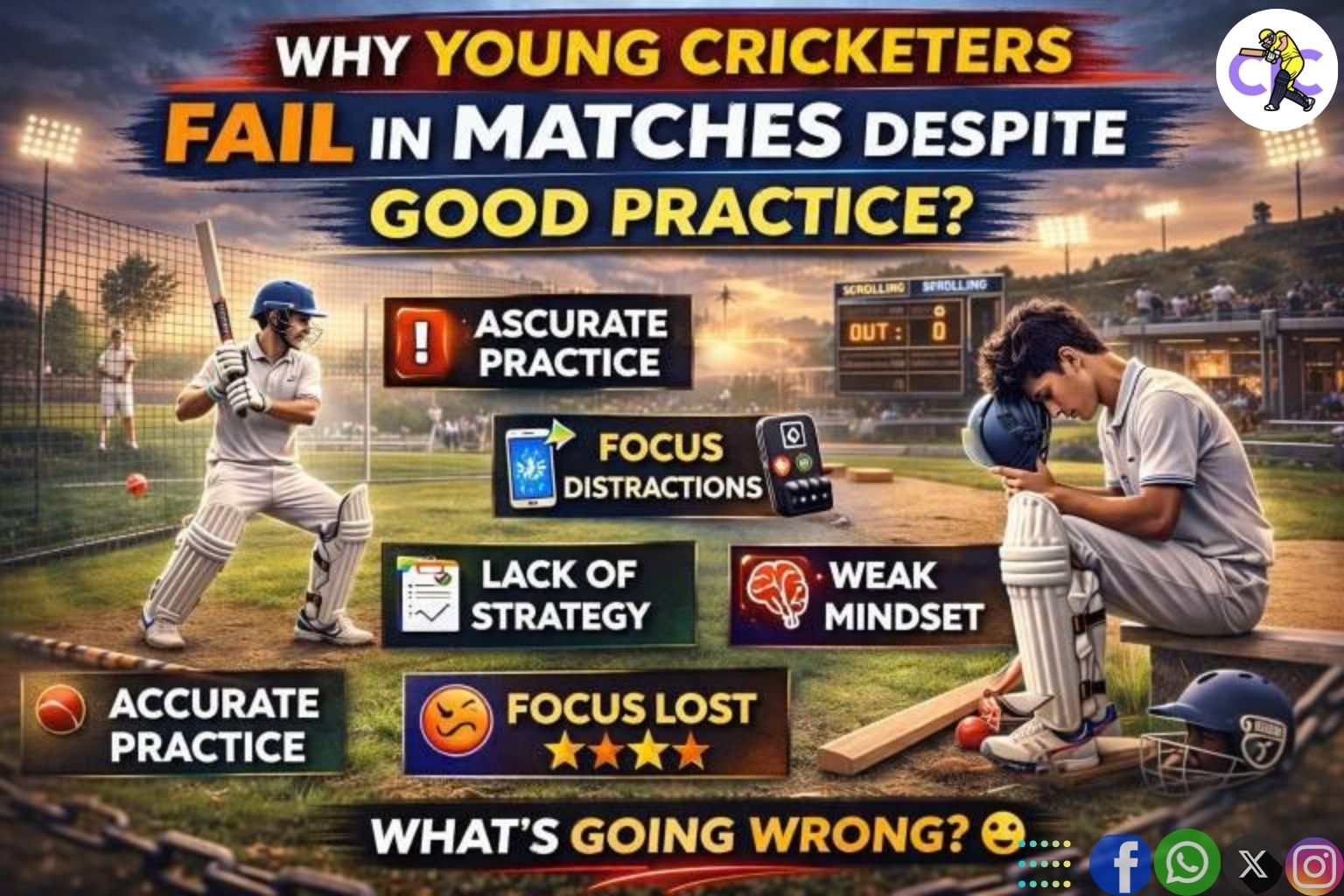
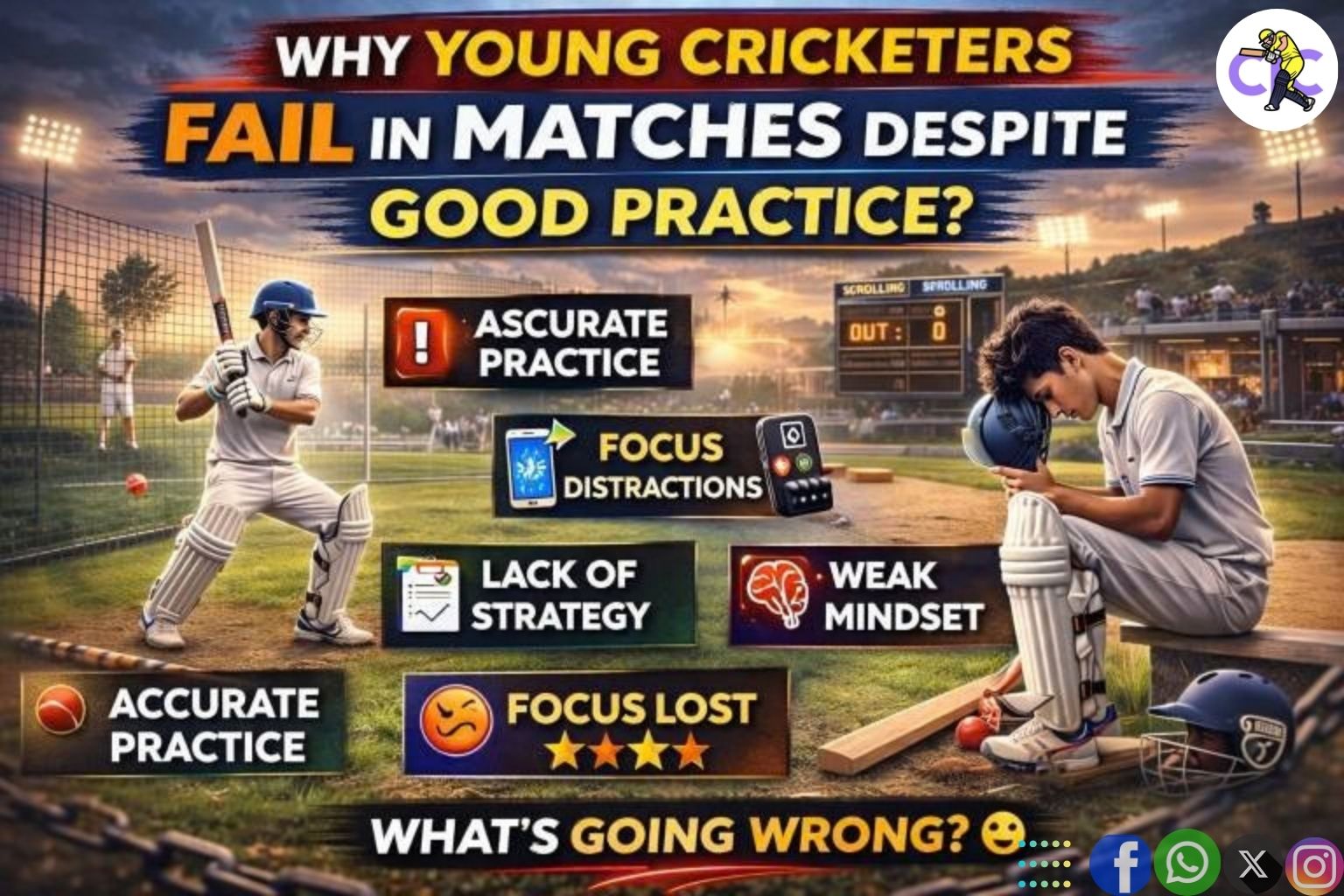
One of the most frustrating experiences for a young cricketer is performing well in practice but failing to deliver during actual matches.
Many players bat confidently in the nets, time the ball perfectly during practice sessions, and bowl accurately in training. But when match day arrives, the same players suddenly struggle to perform. This situation often creates confusion and self-doubt. Also Read: Club Cricket Se State Cricket Tak Ka Safar – Complete Cricket Career Roadmap
This is where the difference between practice vs match performance becomes clear.
Practice sessions usually happen in a controlled environment. Players are familiar with the bowlers, the pitch conditions, and the overall atmosphere. Mistakes are accepted, and there is little pressure attached to each ball.
Matches, however, are completely different.
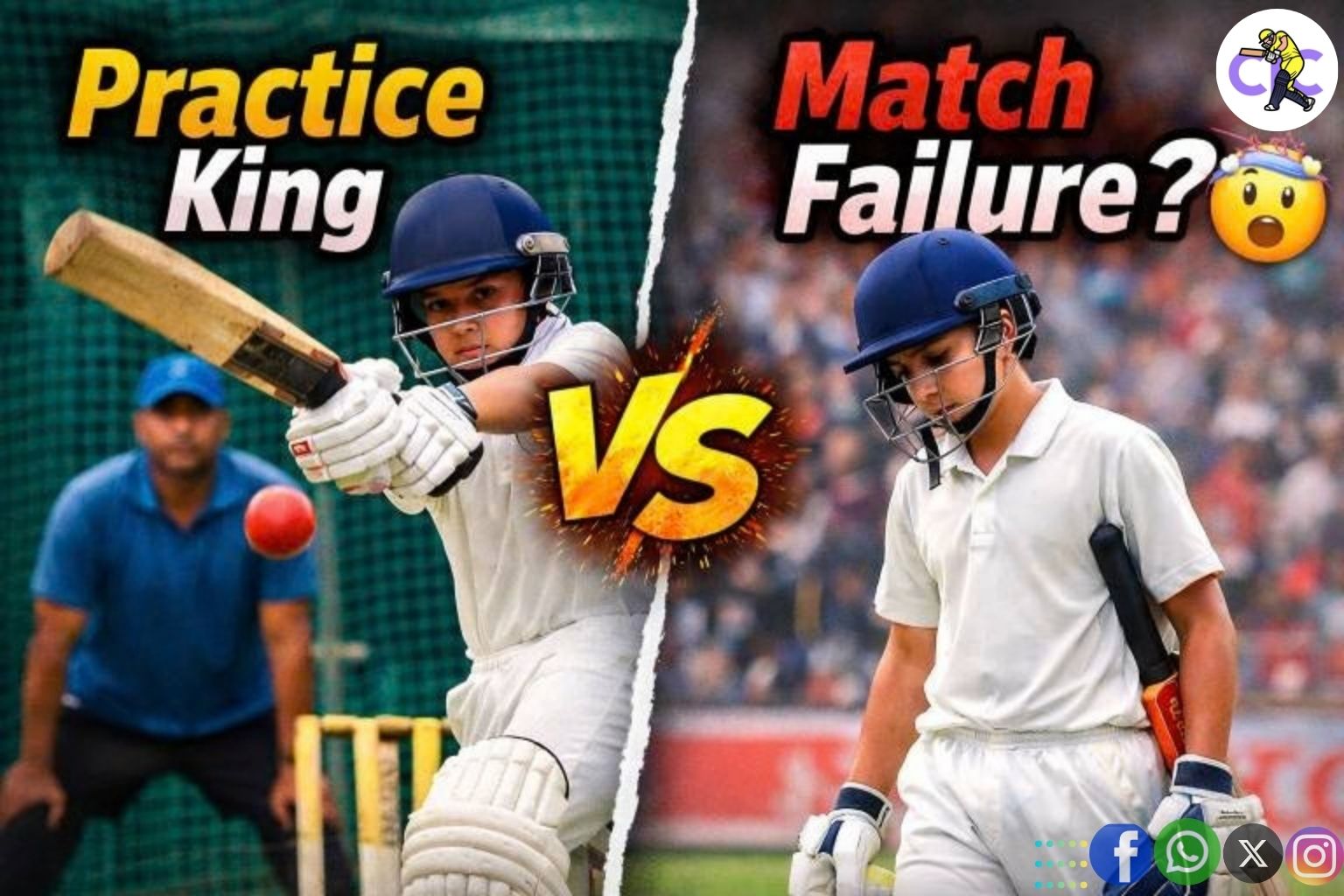
In real games, players face unfamiliar bowlers, unpredictable match situations, crowd presence, and the pressure of expectations from teammates, coaches, and parents. This sudden shift creates match pressure in cricket, which directly affects decision-making and confidence.
Another important reason is lack of match awareness. Some players train technically but do not practice real match scenarios. For example, handling a tough spell from a fast bowler, rotating strike under pressure, or maintaining composure after a mistake.
Without exposure to such situations during training, players find it difficult to adapt quickly during real matches.
Mental preparation is another factor often ignored. Cricket is as much a mental game as it is a physical one. Players who overthink outcomes, worry about getting out, or focus too much on results often lose their natural rhythm during matches. Also Read: Line & Length Control Kaise Improve Kare? – Complete Bowling Accuracy Guide
This is why simply practicing harder is not always the solution. What young cricketers need is structured training that connects practice with real match situations.
This is where Career In Cricket (CIC) helps players bridge the gap between practice and performance.
Through career counselling with experienced international coaches, CIC helps students understand their strengths, weaknesses, and performance patterns. When players receive honest feedback, they can focus on the exact areas that need improvement.
CIC also guides students toward the right cricket academy, where training focuses not only on technical drills but also on match simulations, game awareness, and mental readiness.
Skill-related problems are addressed through elite mentorship, ensuring that players build confidence in their technique. When players trust their preparation, they perform more naturally under pressure.
Additionally, CIC supports young cricketers through structured guidance and opportunity planning, helping them gain the right exposure and match experience.
Through CricSocial, players can also share their match experiences, learn from others, and stay motivated by being part of a supportive cricket community.
The difference between good practice and good match performance often comes down to mental readiness, match awareness, and structured guidance. Also Read: Batting Technique Improve Kaise Kare? – Complete Step-by-Step Guide
When training becomes more purposeful and players learn how to handle pressure situations, their practice starts translating into real match success.
Because in cricket, performing in practice is important — but performing in matches is what truly defines a player.