
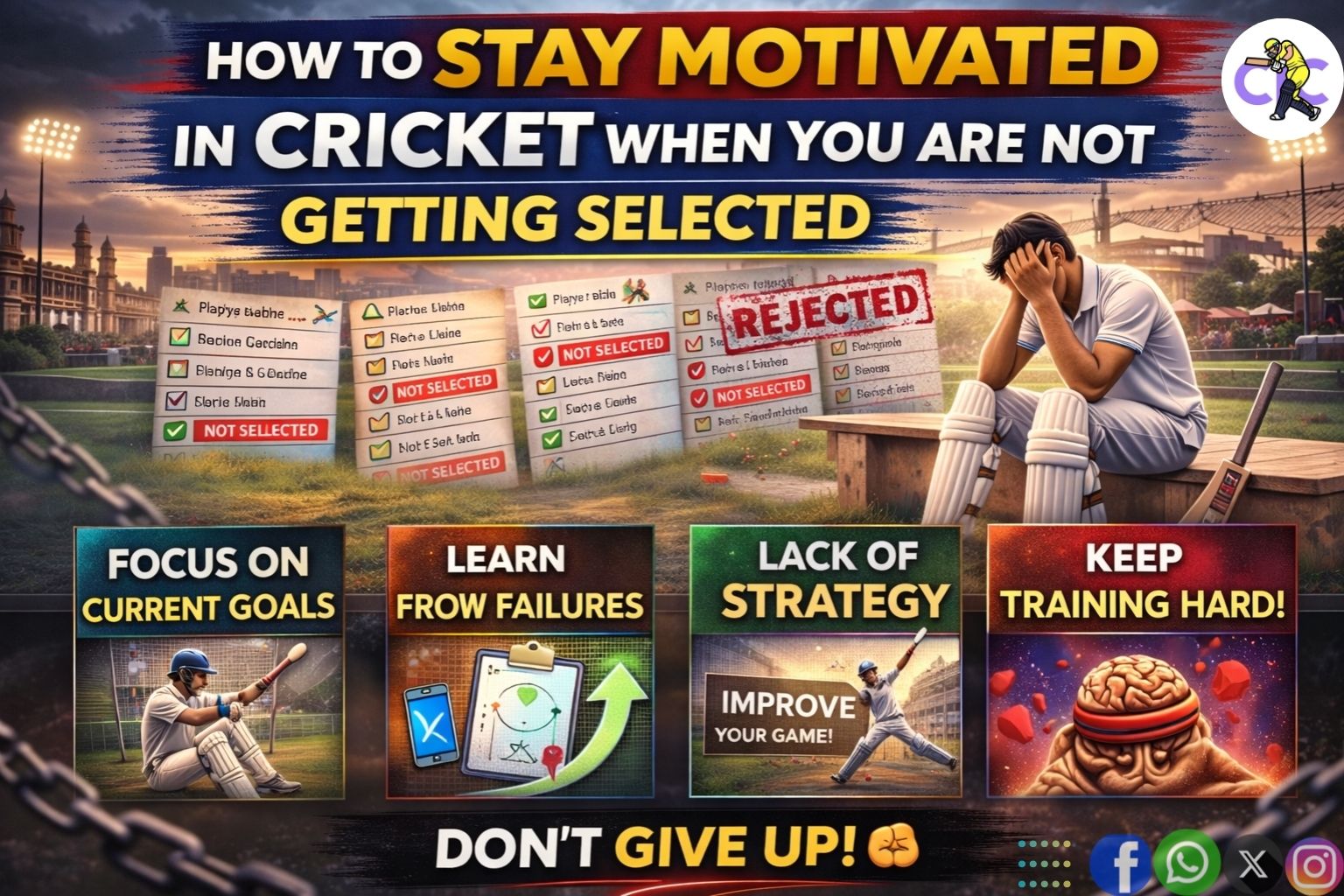
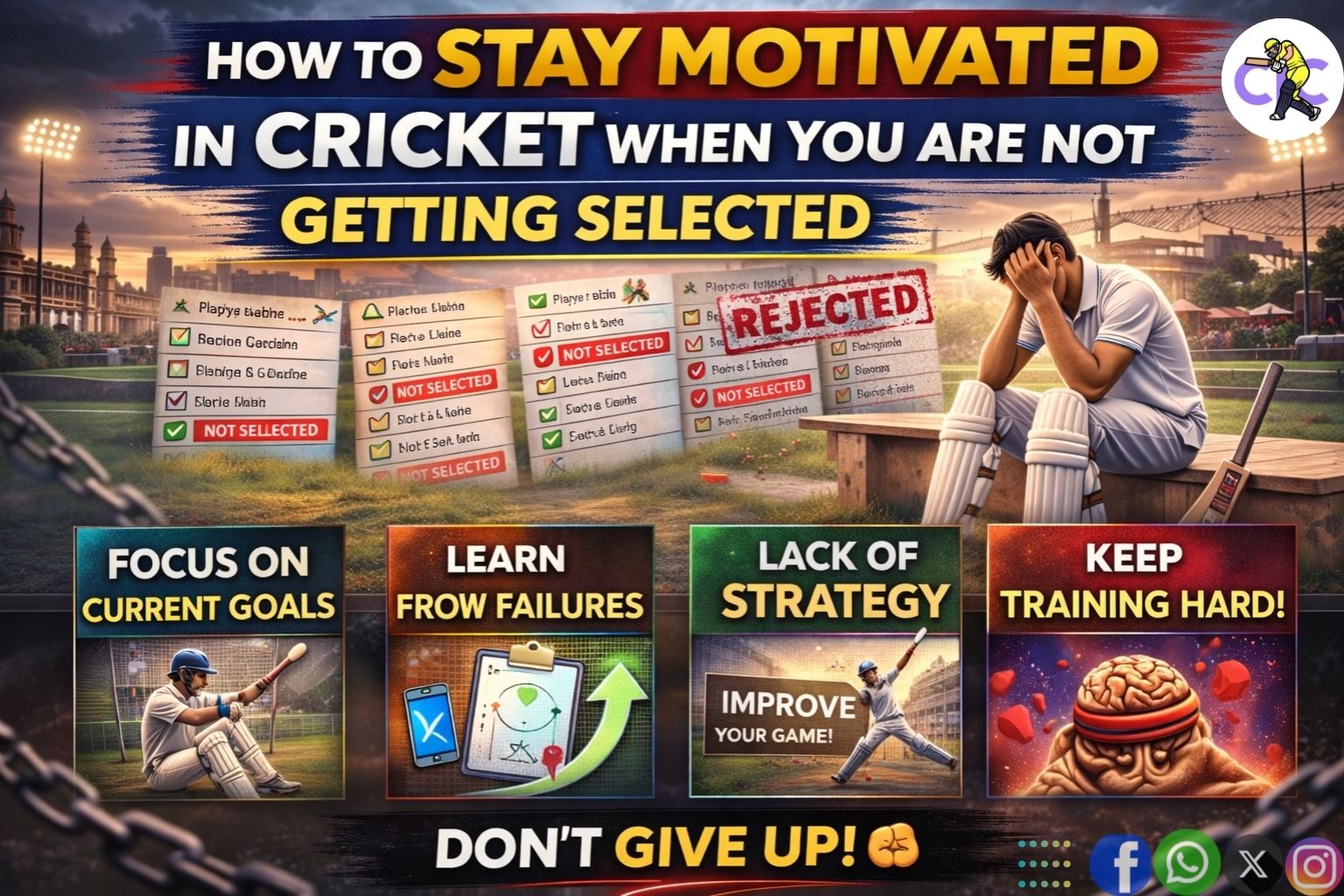
For many young cricketers, selection trials are moments filled with hope and excitement. Players train for weeks or even months preparing for that one opportunity to prove themselves.
But sometimes, despite hard work and preparation, the result is disappointing — not getting selected in the cricket team.
This experience can be emotionally tough. Players often start questioning their talent, their preparation, and sometimes even their dream of becoming a cricketer.
However, it is important to understand one key reality: rejection is a common part of every sports career.
Almost every professional cricketer has faced rejection at some stage. What separates successful players from others is not the absence of failure, but how they respond to it. Also Read: Why Young Cricketers Fail in Matches Despite Good Practice?
Understanding Why Selection Didn’t Happen
Before losing motivation, players should try to understand that selection decisions are influenced by many factors:
Team combination requirements
Specific roles needed in the squad
Performance consistency over time
Fitness and match awareness
Competition from other players
Sometimes, a player may perform well but still not fit into the specific combination the team needs at that moment.
Understanding this helps reduce the emotional impact of rejection.
Focus on Improvement Instead of Frustration
One of the biggest mistakes players make after rejection is losing focus.
Instead of practicing with determination, they start feeling discouraged. Over time, this loss of motivation affects their development more than the rejection itself.
The right approach is to treat selection failure as feedback, not as the end of the journey.
Players should ask themselves:
What areas of my game need improvement?
Am I getting enough match exposure?
Am I mentally prepared for pressure situations?
This mindset shift helps transform disappointment into growth. Also Read: Club Cricket Se State Cricket Tak Ka Safar – Complete Cricket Career Roadmap
Building Long-Term Cricket Motivation
True cricket motivation comes from focusing on progress rather than immediate results.
Young players should remember that cricket careers develop over years, not just one trial or one season. Consistent training, discipline, and patience are essential.
Maintaining physical fitness, practicing under different match scenarios, and strengthening mental resilience all play a crucial role in long-term success.
How the Right Guidance Makes a Difference
Often, young cricketers struggle after rejection because they don’t receive clear feedback or direction. Without proper guidance, they may repeat the same mistakes or lose confidence.
This is where Career In Cricket (CIC) helps aspiring players stay on the right path.
Through professional career counselling from experienced international coaches, CIC helps players understand their current level, identify improvement areas, and build a structured development plan.
CIC also assists students in choosing the right cricket academy, ensuring that training environments support long-term skill growth rather than just short-term results.
Through elite mentorship, players receive targeted guidance to improve their technical and mental game. This structured approach helps rebuild confidence after setbacks.
Additionally, CIC provides a community platform called CricSocial, where players can share experiences, achievements, and challenges with other aspiring cricketers. Being part of a supportive community helps players stay motivated during difficult phases.
Final Thoughts
Not getting selected in cricket can feel disappointing, but it does not define a player’s future.
Every rejection carries a lesson. With the right mindset, guidance, and consistent effort, players can turn setbacks into stepping stones.
In cricket, persistence often matters more than early success. Those who stay motivated, keep improving, and remain patient are the ones who eventually move closer to their goals.