
It is one of the most painful realities in youth cricket — some of the most talented players disappear from the field at a very early age. Also Read: Poor Background Se Cricketer Kaise Bane? – Complete Practical Guide
They had natural timing. They bowled with speed or accuracy. Coaches once called them “future prospects.” Yet within a few years, they quit.
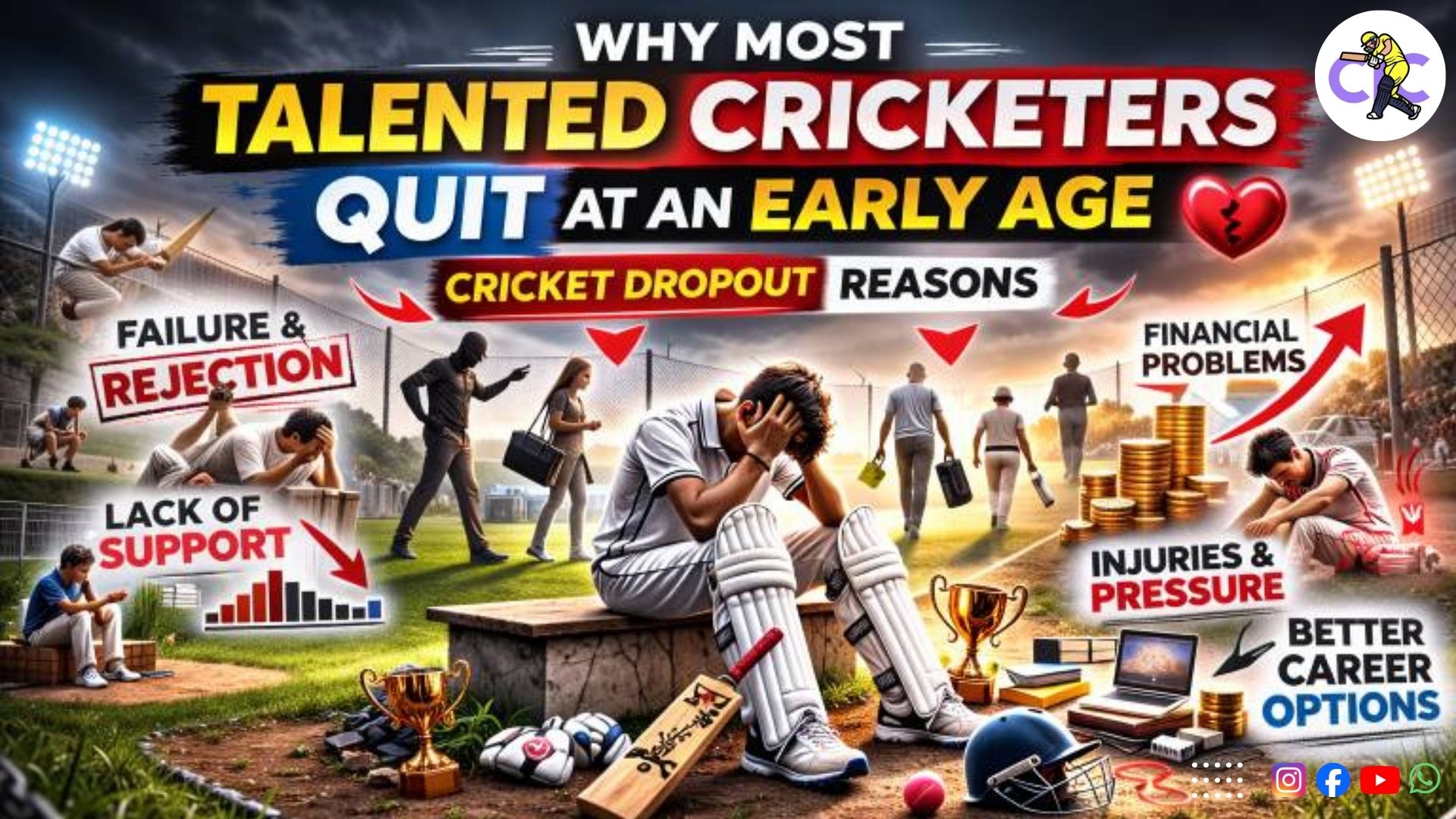
This raises an important question — why cricketers quit even when they clearly have talent?
The answer often lies beyond skill.
One major reason is lack of direction. Many young players train hard but without a clear roadmap. When results don’t come quickly, confusion turns into frustration. Without understanding development stages, players assume they are failing — when in reality, they might just be in a growth phase.
Another strong cricket dropout reason is repeated rejection without guidance. District and state trials are competitive. When players don’t get selected and no one explains what went wrong, self-doubt begins. Over time, confidence declines, and motivation fades.
Wrong academy environment is also a hidden factor. If coaching style doesn’t match the player’s needs, growth slows down. Continuous comparison, lack of individual attention, or result-focused pressure can make young cricketers emotionally exhausted. Also Read: At What Age Should You Take Cricket Seriously?
Parental expectations, academic pressure, and financial uncertainty also play roles. When there is no structured plan balancing cricket and education, families feel anxious. That anxiety indirectly affects the player’s mindset.
The biggest problem?
Most talented players quit not because they are incapable — but because they feel alone and unsupported in their journey.
This is where structured mentorship becomes critical.
At Career In Cricket (CIC), the focus is on sustaining long-term cricket development rather than chasing short-term results.
Through career counselling from experienced international coaches, students receive honest evaluation and clarity about their stage of growth. Understanding realistic timelines reduces unnecessary panic after setbacks.
CIC also helps players choose the right cricket academy, ensuring that environment supports development instead of limiting it. Proper placement reduces burnout and builds steady confidence.
Skill-related gaps are addressed through elite mentorship. Instead of general practice, players work on targeted improvements, making progress visible and measurable. When growth becomes visible, motivation returns.
CIC further provides admission assistance and structured planning, helping families balance academics with cricket ambitions. This reduces long-term uncertainty — one of the biggest silent reasons why cricketers quit.
Additionally, through CricSocial, aspiring cricketers become part of a wider ecosystem. Sharing achievements, struggles, and questions builds emotional strength. When players realize setbacks are common and temporary, they develop resilience instead of quitting.
Talent is important, but talent alone is not enough to survive the journey.
Without clarity, guidance, and emotional support, even the best prospects can walk away. But with structured roadmap, mentorship, and balanced planning, young cricketers can convert talent into sustainable progress. Also Read: Is Your Coach Limiting Your Growth? Signs Every Young Cricketer Must Know
Because in cricket, long-term success belongs not just to the most talented — but to the most guided and supported.