
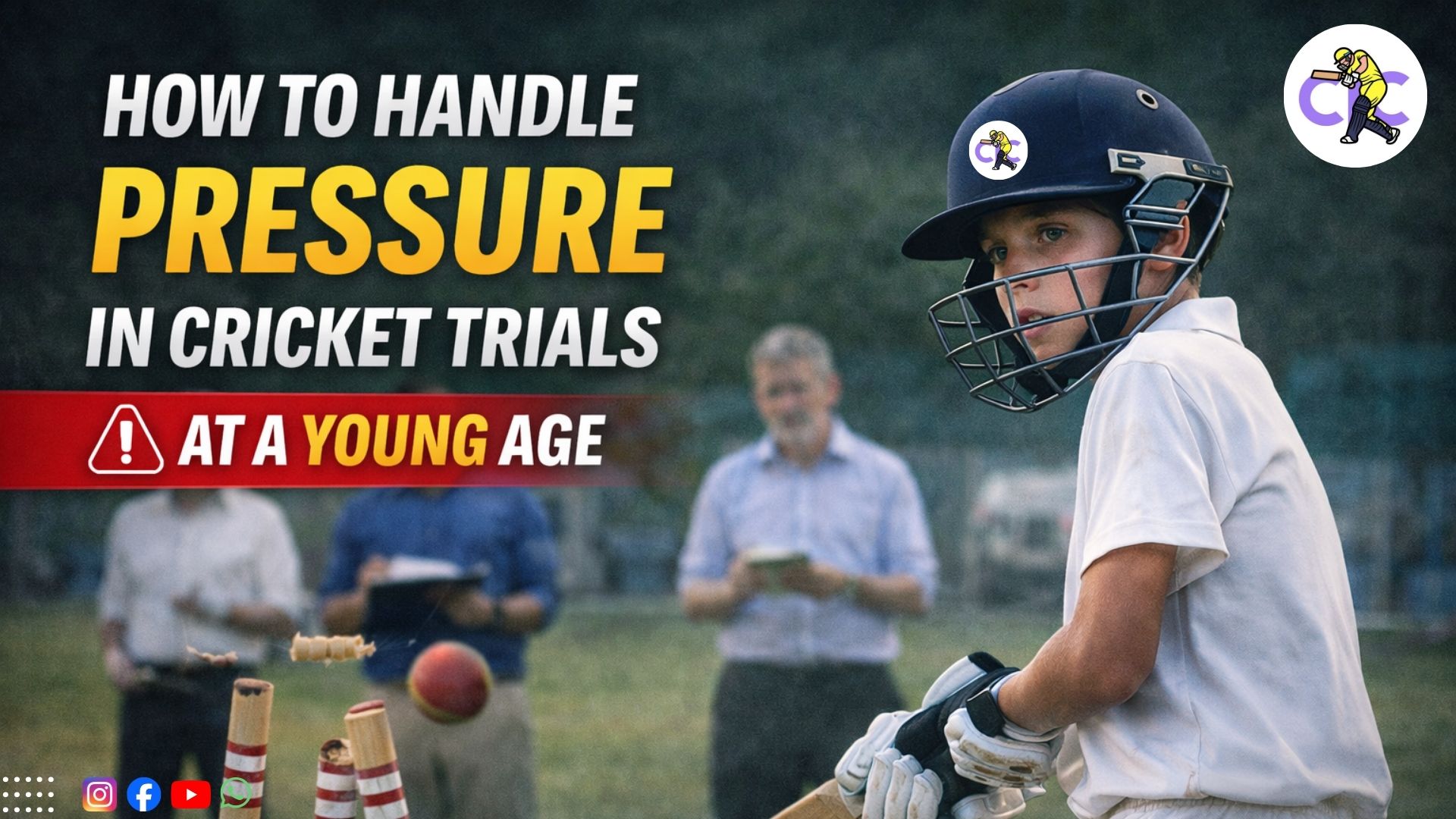
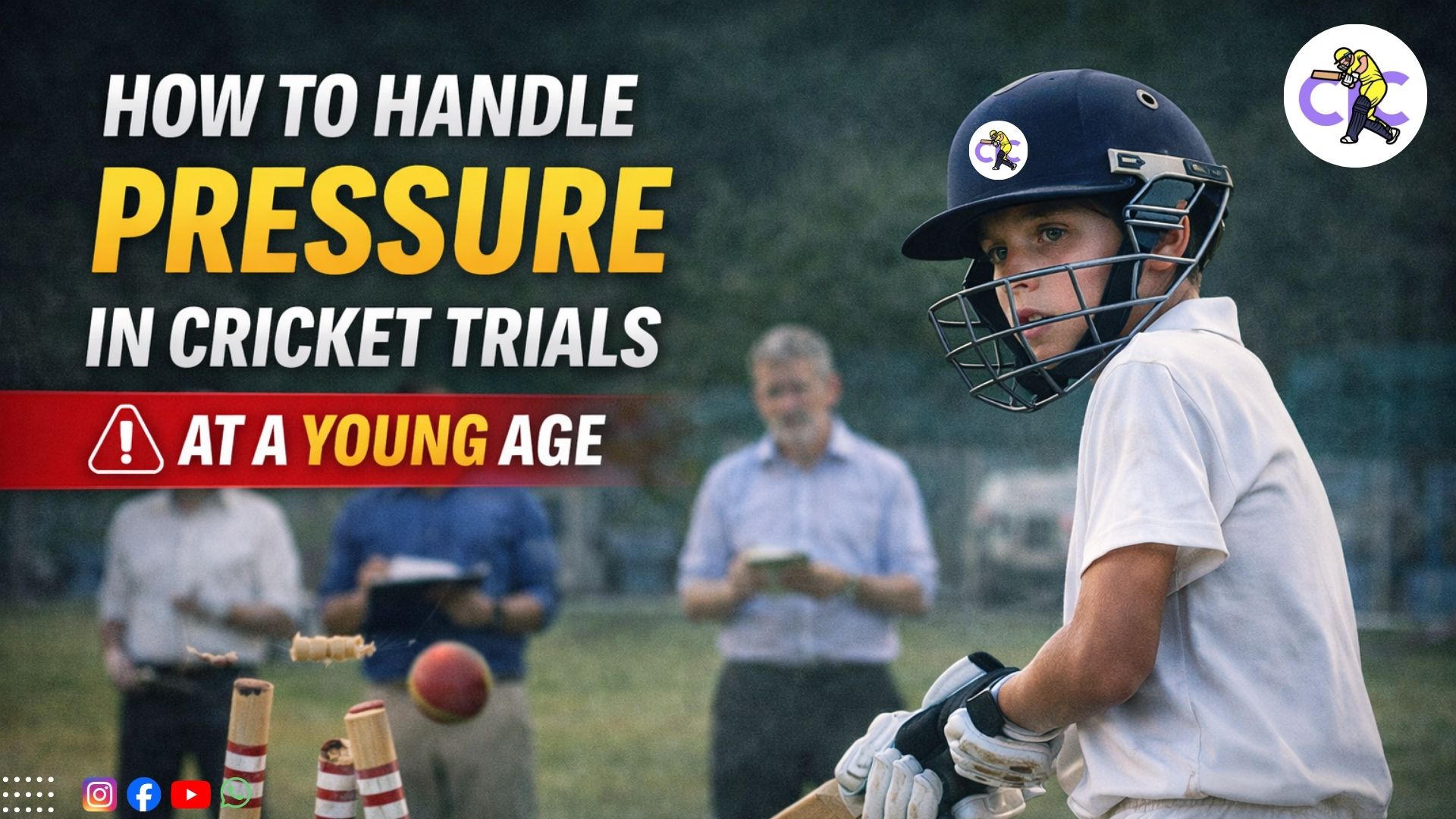
Cricket trials are one of the most stressful moments in a young cricketer’s journey. One bad shot, one dropped catch, or one poor over can feel like everything is at stake.
This pressure often leads to nervousness, poor decision-making, and underperformance.
Understanding how to handle pressure in cricket trials is essential for long-term success.
Also Read: Fear of Failure in Cricket: A Common Problem Among Junior Players
Why Do Young Players Feel So Much Cricket Trial Pressure?
1. Fear of Non-Selection
Young players believe that if they fail in one trial, their cricket career is over. In reality, trials are only one step in a long journey.
2. Limited Opportunities
District and academy trials often provide very few chances, increasing anxiety among players.
3. Parental and Social Expectations
Expectations from parents, coaches, and peers add extra pressure, even before the player steps onto the field.
4. Comparing Yourself With Others
Seeing other players perform well can make young cricketers lose confidence and forget their own strengths.
Also Read: Why Young Cricketers Lose Confidence Early? Causes & Solutions
How Pressure Affects Performance in Cricket Trials
Cricket trial pressure doesn’t improve performance — it restricts it.
Common effects include:
Playing too defensively
Rushing shots out of fear
Overthinking bowling plans
Losing natural rhythm
Forgetting basics
Many talented players fail in trials not because of lack of skill, but because of mental pressure.
How to Handle Trials in Cricket – Practical Tips
1. Focus on What You Can Control
You cannot control selection or other players’ performance. Focus only on:
Your attitude
Your effort
Your decision-making
Selectors notice confidence and clarity more than just runs or wickets.
2. Simplify Your Game
Trials are not the place to try something new.
Stick to:
Your strongest shots
Simple bowling plans
Safe fielding options
A simple game reduces pressure automatically.
3. Accept That Mistakes Will Happen
Even in trials, mistakes are normal. One dot ball or one missed chance does not end your selection chances.
Selectors evaluate:
Body language
Recovery after mistakes
Confidence under pressure
4. Prepare Mentally Before the Trial
Mental preparation is as important as net practice:
Visualize yourself performing calmly
Control breathing before your turn
Treat trials like a normal practice session
Calm mind = better execution.
5. Think Long-Term, Not One Day
One trial never decides a cricket career.
Most professional cricketers:
Failed multiple trials
Faced rejection early
Improved with experience
When players think long-term, pressure automatically reduces.
What Selectors Actually Look for in Trials
Young players often misunderstand trials.
Selectors usually observe:
Basic technique
Confidence and intent
Attitude and discipline
Potential for future development
They are not expecting perfection — they are looking for potential.
Also Read: IPL Teams ka Scouting System Kaise Kaam Karta Hai? Complete Inside Guide
Role of Parents During Cricket Trials
Parents can either reduce or increase pressure.
Helpful parent behavior:
Support, not instructions
Calm reactions to failure
Encouragement after trials, regardless of result
A relaxed player performs better than a scared one.
How Career IN Cricket (CIC) Helps Players Handle Trial Pressure
Many young cricketers fail to handle trials because they lack proper career guidance, not talent.
What CIC Does
Career IN Cricket (CIC):
Guides students on how cricket trials actually work
Educates players and parents about selection realities
Helps players plan long-term cricket pathways
Focuses on mindset, preparation, and confidence
CIC’s Future Vision
In the future, Career IN Cricket (CIC) aims to work like a professional cricket scouting and guidance platform, similar to IPL scouting systems:
Players will get structured platforms to showcase talent
Focus will shift from one-day trials to consistent performance
Fear-based cricket will be replaced by informed preparation
CIC believes no player should fail simply because of pressure or lack of awareness.
Final Conclusion
Cricket trial pressure is real — especially at a young age — but it is completely manageable. When players understand the process, focus on basics, and think long-term, performance improves naturally.
Trials do not demand perfection.
They demand clarity, confidence, and courage.
With the right mindset and guidance, young cricketers can turn pressure into opportunity.
Career IN Cricket (CIC) exists to ensure that pressure never becomes the reason a young talent gives up on their dream.