
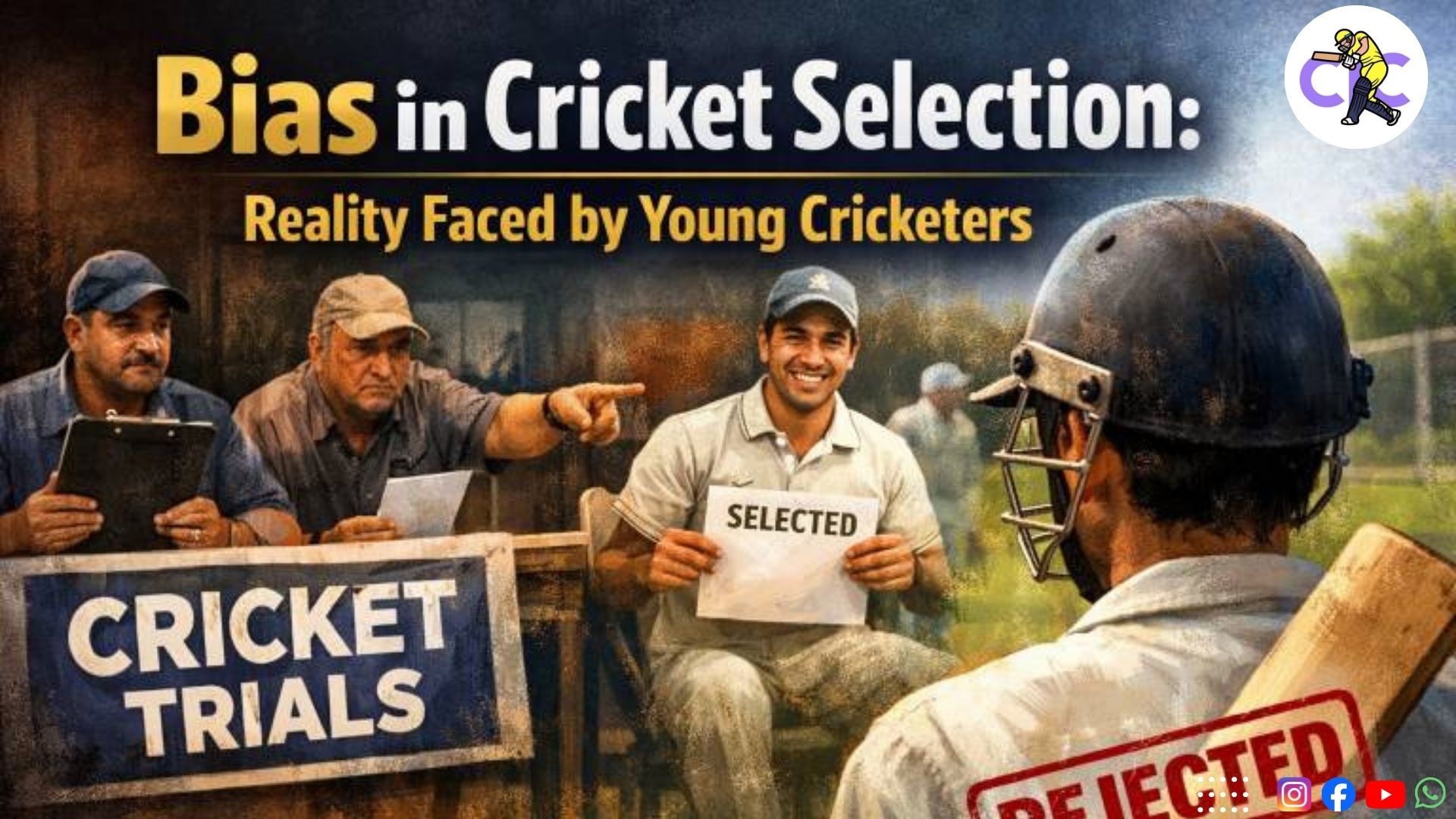
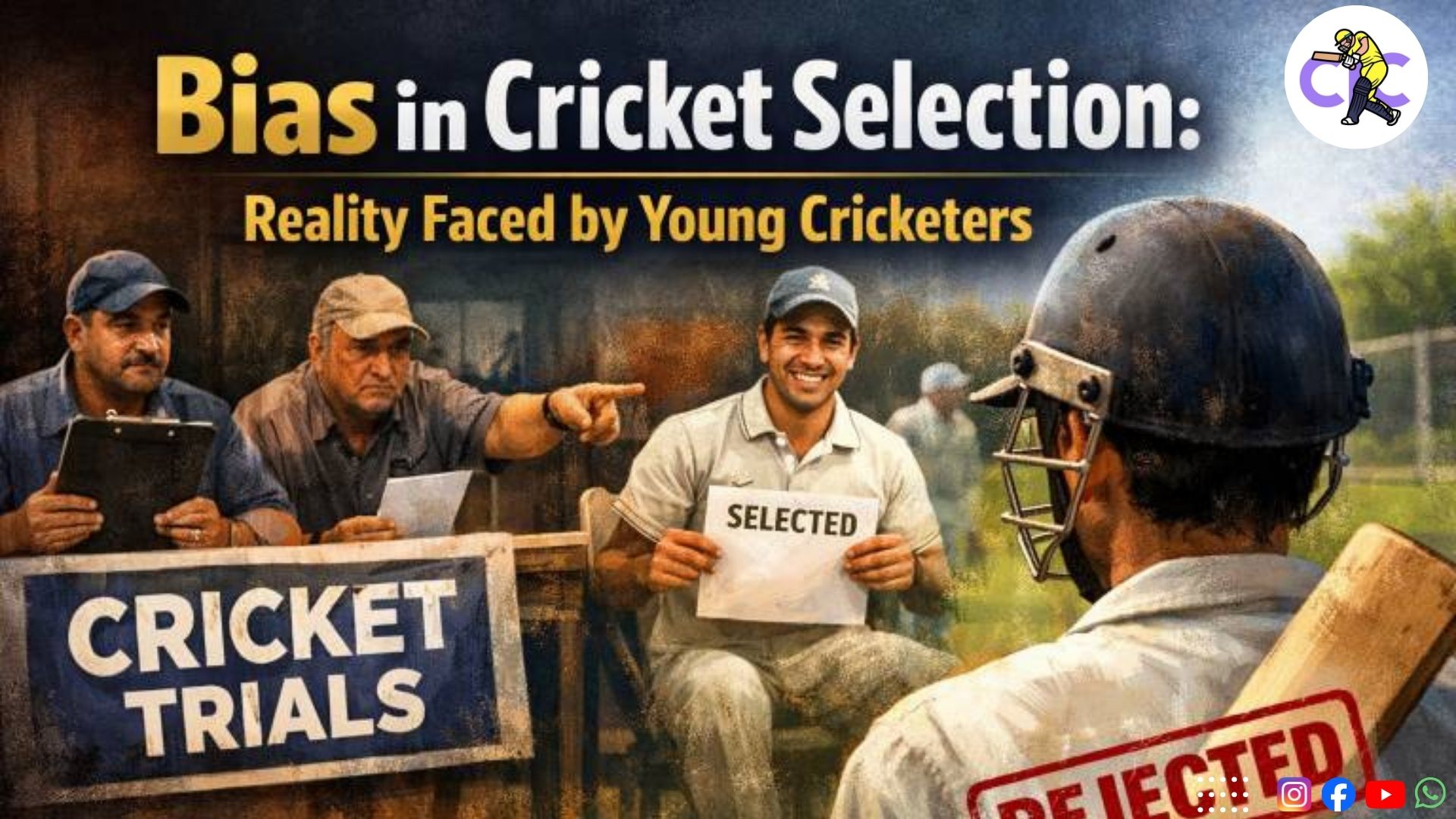
For many young cricketers, selection trials are emotional moments. Months of preparation come down to a few overs, a short batting opportunity, or a brief fielding session. When results don’t go their way, one common thought appears — “Was it bias?” Also Read: Ranji Trophy Tak Ka Safar – Complete Roadmap (Step-by-Step Guide)
The topic of cricket selection bias is sensitive but real in the minds of many aspiring players. Sometimes, players feel that selections are influenced by visibility, academy reputation, prior performance records, or known networks. Whether these perceptions are fully accurate or partially emotional, the frustration they create is very real.
However, before concluding that bias is the only reason, it is important to understand the cricket trials reality.
Selectors often evaluate more than just skills. They observe body language, temperament, fitness, match awareness, consistency, and readiness for the specific level. Many young players are unaware of these hidden criteria. When expectations don’t match evaluation standards, disappointment feels like injustice.
Another issue is lack of structured preparation. Players focus heavily on technical skills but ignore trial-specific preparation — handling pressure, understanding role clarity, or adapting quickly to limited opportunities. Without complete readiness, performance may not reflect potential.
Repeated rejection without clear feedback increases self-doubt. Some players lose motivation, while others start blaming the system entirely. Both reactions can slow long-term development. Also Read: State Level Cricket Kaise Khele? – Detailed & Practical Roadmap
This is where structured mentorship becomes crucial.
At Career In Cricket (CIC), the focus is on helping players understand how the selection system actually works. Through career counselling by experienced international coaches, students receive clarity about evaluation standards, realistic benchmarks, and readiness levels.
Instead of assuming bias, CIC encourages data-based preparation. Skill gaps are identified early through elite mentorship, and players work systematically on areas that truly matter at district and state trials.
CIC also helps students choose the right cricket academy, ensuring exposure and match readiness align with higher-level expectations. Being in the correct training environment reduces shock during competitive trials.
Another important factor is guidance related to admissions and opportunities. CIC’s structured assistance ensures players are aware of multiple pathways and don’t depend on a single trial outcome. This reduces emotional stress after rejection.
Additionally, CIC offers CricSocial, an open platform where aspiring cricketers can share their experiences and learn from others. Understanding different journeys helps players realize that setbacks are common and growth takes time.
Selection in cricket is competitive, and sometimes it may feel unfair. But growth becomes possible when frustration is replaced by preparation, and confusion is replaced by clarity. Also Read: How Wrong Cricket Academy Selection Can Damage a Young Player’s Career
With the right roadmap, realistic expectations, and consistent mentorship, young cricketers can rise above perceived bias and focus on what they can control — their development, performance, and mindset.